Exact model names matter in speaker comparisons. JBL Go 4 is a small, light travel speaker; boAt Stone 352 Pro is a larger 14W option with AUX and TF compatibility; Portronics SoundDrum P lists 20W output and USB, AUX and microSD playback. This guide compares published specifications rather than hands-on testing, prices or changing seller data.
Quick answer
JBL Go 4 suits buyers prioritising compact size, IP67 and easy portability. boAt Stone 352 Pro suits buyers wanting more output and a longer stated playback claim. Portronics SoundDrum P suits buyers wanting 20W output plus USB/AUX/microSD versatility.
Comparison table
| Feature | JBL Go 4 | boAt Stone 352 Pro | Portronics SoundDrum P |
|---|---|---|---|
| Output power | 4.2W RMS | 14W | 20W |
| Bluetooth | 5.3 | 5.3 | 5.0 |
| Playback claim | Up to 7 hours | Up to 12 hours at 60% volume | 6–7 hours |
| Water resistance | IP67 | IPX5 | Not confirmed |
| Built-in mic | No; supplied listing says without mic | Not confirmed | Speakerphone support |
| AUX / USB / TF | Not confirmed | AUX and TF card | AUX, USB and microSD/TF |
| Multi-speaker / app | Auracast, stereo pair, JBL Portable app | Not confirmed | Not confirmed |
| Weight | About 0.19 kg | About 784 g | About 740 g |
Sound output and use case
JBL’s 4.2W RMS is primarily about portability. Its 45 mm transducer and 90Hz–20kHz stated response suit personal listening, a desk or small room. The 14W boAt is a more suitable starting point for casual room or outdoor listening with friends. SoundDrum P has the highest stated output at 20W, making it the model to consider when volume headroom matters. Wattage alone does not determine sound quality: tuning, placement, music and room shape also matter.
Battery and charging
JBL states up to 7 hours, depending on volume and content. boAt states up to 12 hours at 60% volume, and Portronics lists 6–7 hours. Treat all as published claims, not promises: loud volume, calls and connection use change runtime. JBL documents an 850mAh-equivalent battery; boAt lists 3600mAh. Portronics official pages show differing battery capacities, so this comparison uses its safer playback claim. JBL and Portronics document Type-C charging; boAt documents 2 to 2.5 hours charging time.
Water resistance and portability
IP67 on JBL covers dust and water protection under its test conditions. boAt’s IPX5 is a different rating and should not be treated as equivalent to IP67. No rating is stated here for SoundDrum P without official confirmation. At about 190g, Go 4 is far easier to carry than the 784g boAt and 740g Portronics. JBL’s integrated loop helps its travel-focused design; the larger models make more sense where output and inputs are more important than pocketability.
Connectivity, calls and multi-speaker use
boAt lists Bluetooth, AUX and TF card compatibility. Portronics documents USB music, AUX and microSD/TF playback, useful for stored music or older sources. JBL is simpler but supports the JBL Portable app and Auracast; JBL also documents pairing two Go 4 speakers for stereo. Do not assume TWS support for the other two without exact-model confirmation. JBL’s supplied listing says without mic. SoundDrum P documents hands-free calling in Bluetooth mode. A microphone is not claimed here for the exact Stone 352 Pro.
Which should you choose?
Choose JBL Go 4 for the smallest and lightest option, IP67, and JBL’s app/Auracast ecosystem. Choose boAt Stone 352 Pro for more stated output, its longer published runtime and AUX/TF flexibility. Choose Portronics SoundDrum P for the highest stated output, USB/AUX/microSD playback and documented hands-free calling. Before ordering, check intended use, output needs, water resistance, call requirements, ports, weight, charging, app or multi-speaker support, warranty and return terms.
Browse Buying Guides, Technology Guides, or the TWS Earbuds Buying Guide for related research.
How room size and listening distance change the comparison
The JBL Go 4 is the lowest-power option here, and that is not automatically a disadvantage. Its compact approach can be more useful when you listen close by: on a work desk, beside a bed, in a hotel room or while packing light. At a short distance, a small speaker does not need to fill a large open space. The benefit is that it is easier to carry, store and bring along often.
The boAt Stone 352 Pro's 14W stated output gives it a different role. It may suit a casual indoor gathering, a balcony or a picnic where listeners are farther from the speaker than they would be at a desk. The Portronics SoundDrum P has the highest stated output at 20W, so it is the model to investigate when higher volume headroom is important for a room or relaxed outdoor use. Neither figure is a promise of the same sound in every setting.
Wattage does not automatically equal better sound quality. Enclosure size, driver design, tuning, placement, the music itself and listening distance all change the result. A speaker placed in a corner can sound different from the same speaker on an open table. Rather than choosing only the largest watt number, start with where you will listen and how far away the audience normally sits.
Real-world playback, travel and outdoor expectations
Manufacturer playback figures are useful comparisons only when their conditions are remembered. JBL says its up-to-7-hour figure depends on volume and content. boAt's up-to-12-hour claim is stated at 60% volume. Portronics lists 6–7 hours. High volume, frequent calls, long Bluetooth sessions and the type of source material can all affect the result. RGB lighting may also affect runtime on a speaker that uses it. For Portronics, compare the published playback hours rather than a battery-capacity number because its official pages show conflicting capacity figures.
For travel, weight can matter more than a specification table suggests. JBL Go 4 is about 0.19 kg, while the boAt and Portronics models are about 784 g and 740 g respectively. A carry loop or strap can be useful when moving between a desk, backpack, park and hotel room. A smaller speaker with lower output can be the better choice when it is light enough to take every day. A larger speaker may be more suitable when it normally stays in one place and output or inputs take priority.
Water ratings also need careful reading. JBL's IP67 rating includes dust protection and temporary water-immersion testing under its published conditions. boAt's IPX5 rating concerns splash and water-jet resistance. They are not equivalent ratings, and neither is a reason to submerge a product beyond its official guidance. A water rating is not confirmed here for SoundDrum P, so it should be kept away from water rather than assumed to offer similar protection.
Connectivity for older devices and offline music
Bluetooth is convenient for phones and laptops, but physical and storage playback options can be equally important. AUX can be useful with an older television, laptop or audio device with a headphone output. USB and microSD or TF playback can make a speaker more independent of a phone connection when travelling or using stored music. Stone 352 Pro lists AUX and TF compatibility; SoundDrum P documents AUX, USB and microSD or TF playback. JBL Go 4 is the simpler portable option, with JBL Portable app support and verified Auracast and stereo-pair options instead.
Hands-free calling is another difference that should not be assumed. SoundDrum P documents speakerphone use in Bluetooth mode. The supplied JBL listing says without mic, while a built-in mic is not confirmed here for the exact Stone 352 Pro. If calls matter for a work desk, verify the exact current product documentation before ordering.
Choosing for your routine, not a headline feature
Choose JBL Go 4 if portability is the main priority. It is the lightest option, its IP67 rating matters for dusty or wet everyday environments, and the JBL app or Auracast ecosystem is useful for your existing setup. It is a sensible choice when the speaker will move between a desk, backpack and short trips more often than it will serve a group at distance.
Choose boAt Stone 352 Pro if you want more stated output than Go 4, its longer claimed playback under stated conditions matters, and its RGB or design-led features appeal to you. It can suit a value-oriented all-rounder role for casual home use, a balcony or a picnic, provided its larger weight is acceptable. AUX and TF card compatibility may also make it more practical than a Bluetooth-only setup.
Choose Portronics SoundDrum P if you want the highest stated output, AUX/USB/microSD flexibility, or hands-free calling in Bluetooth mode. Its input options can be especially useful for an older television, a laptop, offline playlists or shared household use. The trade-off is a bulkier form than JBL Go 4, so it is less compelling when low weight is the deciding factor.
Before pressing buy, make a short list of the device you will connect most often, the location where the speaker will live, the usual listening volume and whether stored music or calls are important. Also confirm current warranty and return terms. That simple check is often more useful than comparing a long feature list that you may never use.
Common buying mistakes
- Choosing only by wattage: output is useful, but room size, tuning and listening distance matter too.
- Treating water ratings as identical: IP67 and IPX5 describe different tested protections.
- Ignoring weight: a heavier speaker can be less convenient for a backpack or daily carry.
- Assuming every model has a microphone: JBL's supplied listing says without mic and boAt mic support is not confirmed here.
- Assuming every speaker has AUX or card playback: check the exact model's ports before buying.
- Comparing battery figures without conditions: volume, lighting, calls and source use can change runtime.
Examples to compare on Amazon
As an Amazon Associate I earn from qualifying purchases.
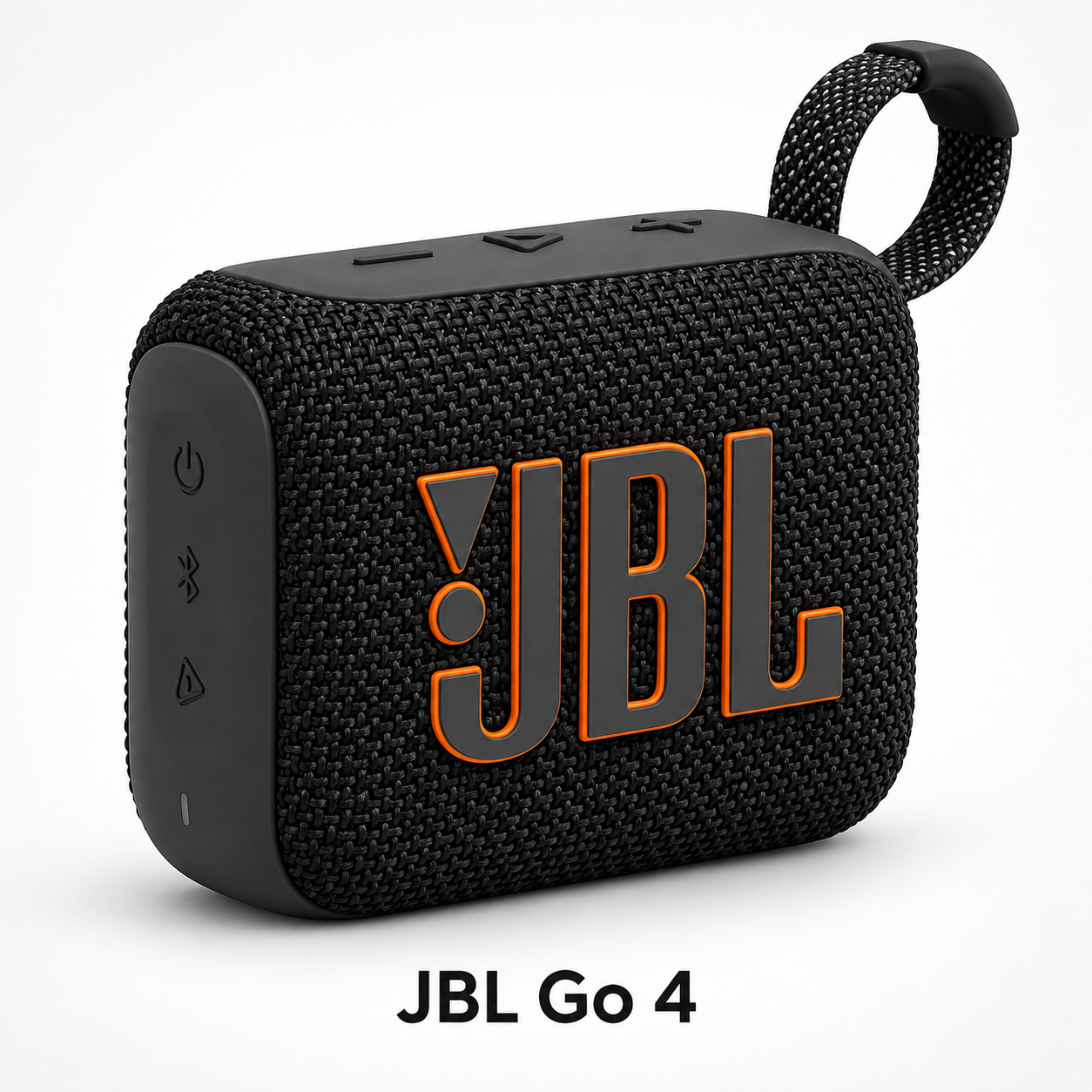
JBL Go 4
Check JBL Go 4 on Amazon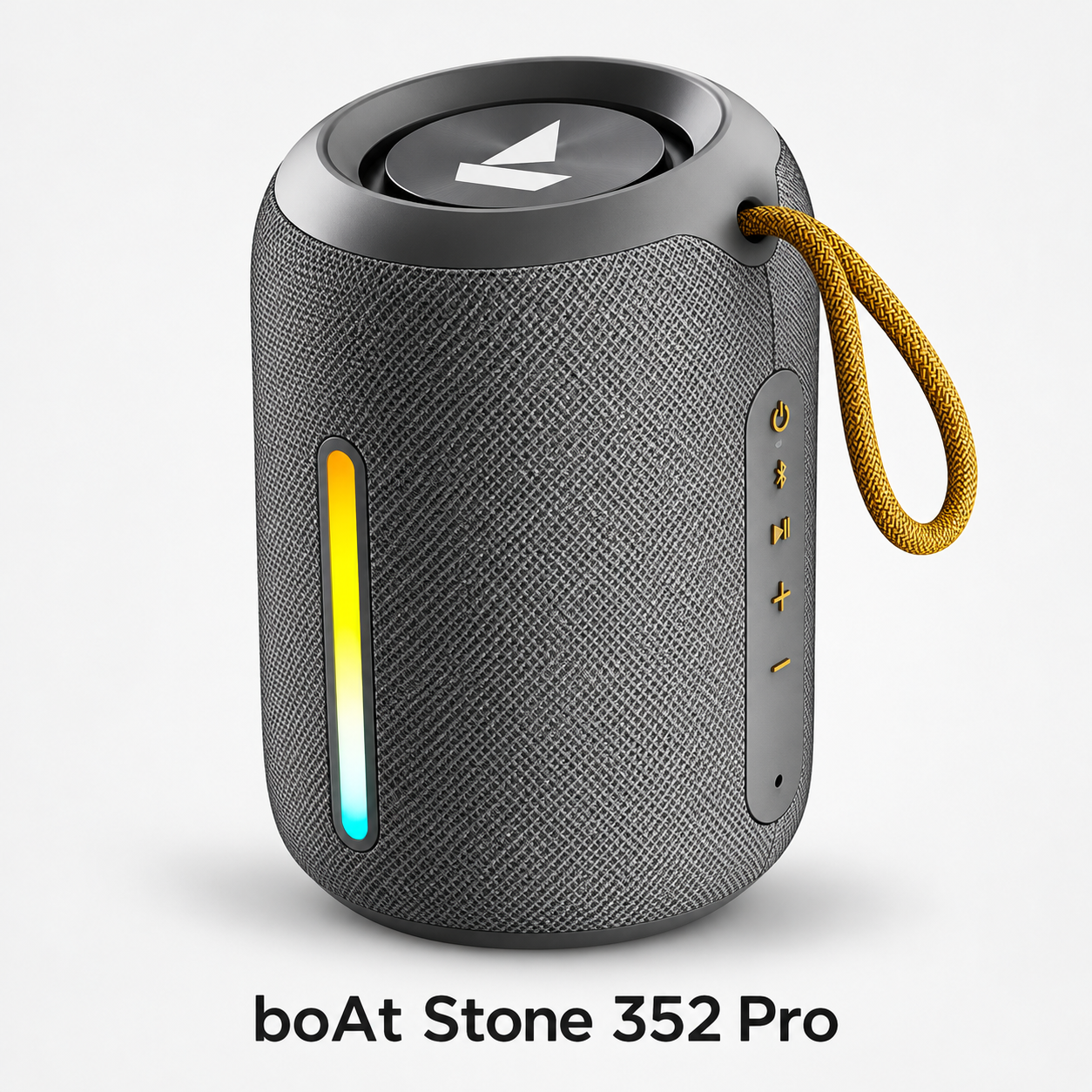
boAt Stone 352 Pro
Check boAt Stone 352 Pro on Amazon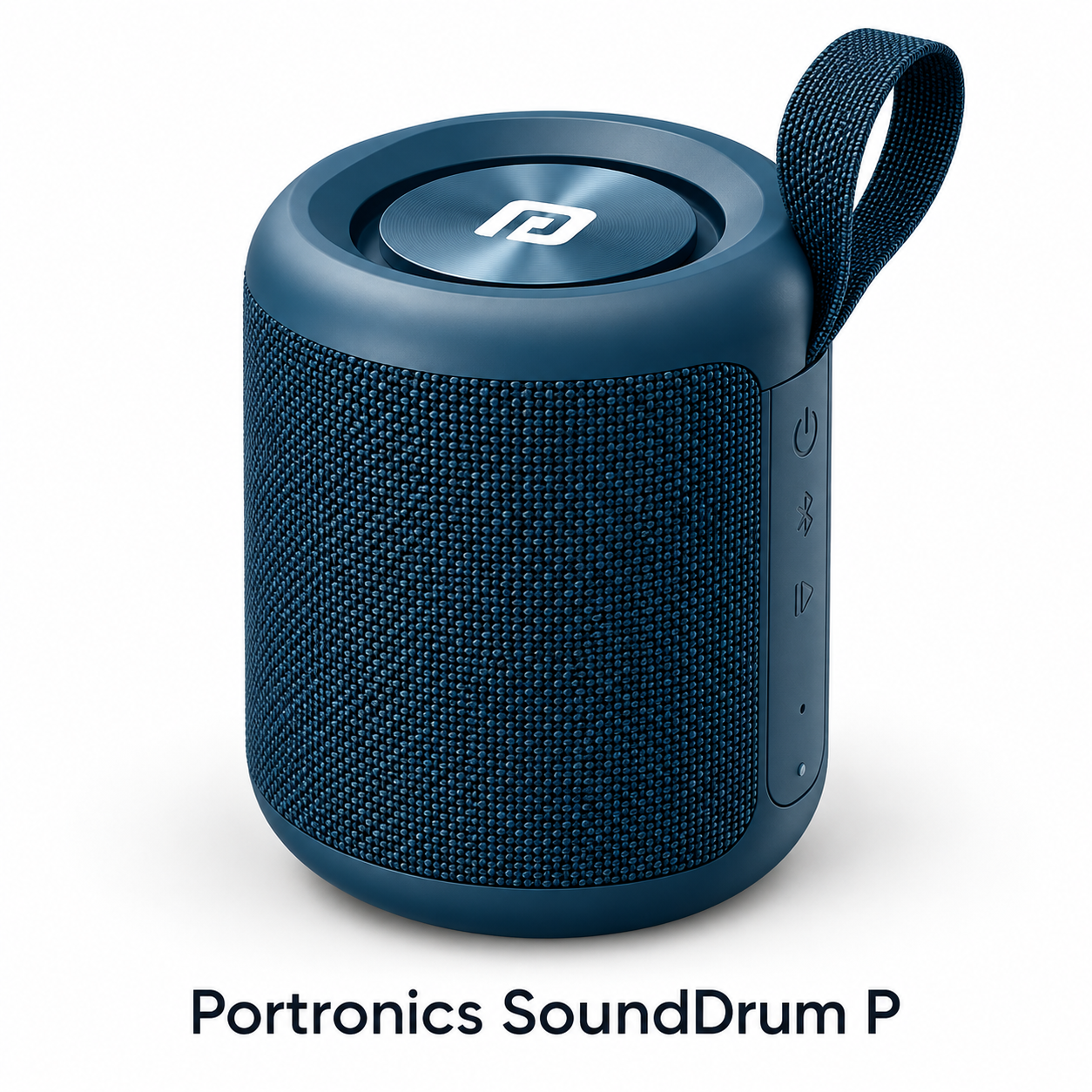
Portronics SoundDrum P
Check Portronics SoundDrum P on AmazonFrequently asked questions
Is JBL Go 4 waterproof?
JBL lists Go 4 as IP67 waterproof and dustproof.
Does JBL Go 4 have a microphone?
The supplied listing says without a microphone.
How long does boAt Stone 352 Pro last?
boAt states up to 12 hours at 60% volume.
Does boAt Stone 352 Pro support AUX?
boAt lists AUX and TF card compatibility.
Does Portronics SoundDrum P support AUX and USB?
Yes. Portronics documents AUX, USB music and microSD/TF playback.
Which speaker has the highest stated output?
SoundDrum P at 20W.
Which is easiest to carry?
JBL Go 4 at about 0.19 kg.
Can these speakers be used outdoors?
They can suit casual outdoor listening, subject to their stated protection and your volume needs.